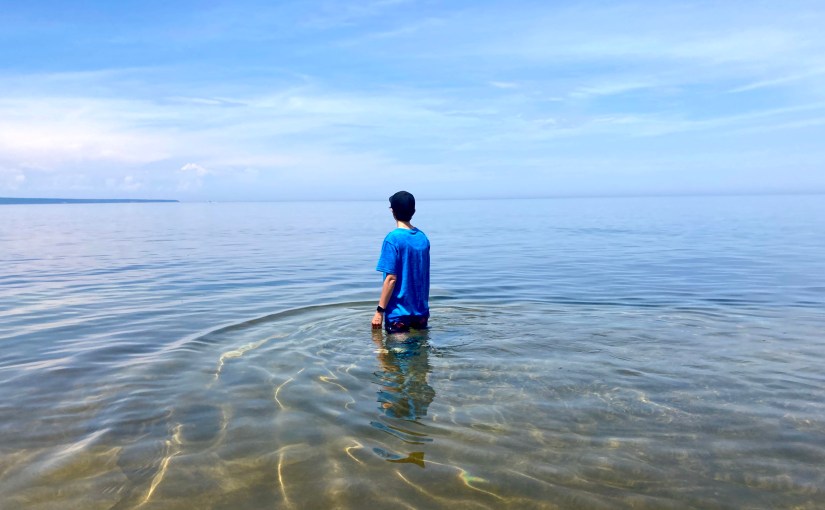
Pictured Rocks National Lakeshore stretches 42 miles along the coast of Lake Superior in Michigan’s Upper Peninsula. From Munising to Grand Marais, there is no shortage of sights to see, coastlines to paddle, and trails to hike. Its fifteen miles of 200-foot picturesque cliffs have been naturally sculptured into impressive formations such as arches, castle turrets, and caves. With 73,236 acres of land and a hundred miles of trail systems to explore, Pictured Rocks is an essential addition to your ever-growing bucket list.
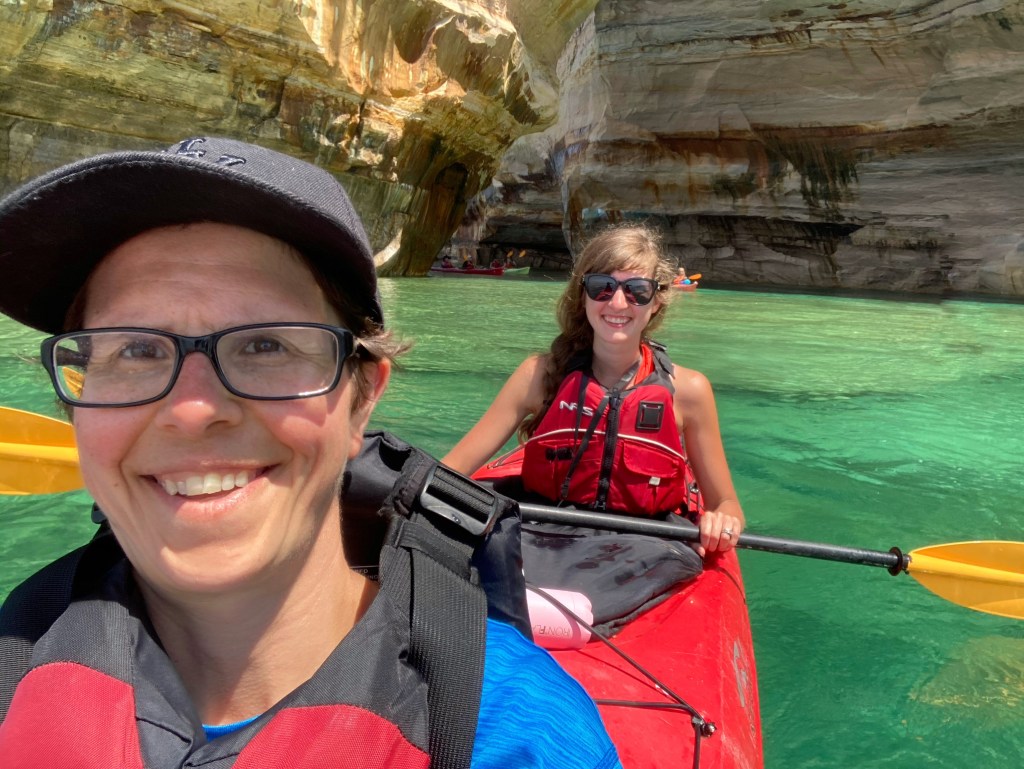
Before arriving at Pictured Rocks, the word on the street seemed to declare that the towering, colorful cliffs were best viewed at water level, and I can one-hundred percent validate this statement. Don’t get me wrong: the views from the top are breathtaking, but nothing quite beats the way that the lofty cliffs look from below. Getting the two perspectives–from above and below–is even better. That being said, there are plenty of beaches along the coast to launch paddle boards and kayaks, but the safest way to explore the lakeshore is by booking a tour with an expert guide. The conditions on the Great Lakes are always unpredictable and constantly changing, so if you’re not fully prepared for every possible emergency or are unclear on where you’re at or where you’re going, it’s best to have a guide accompany you. And that’s exactly what we did. We chose Northern Waters Adventures in Munising. We checked in at their shop, and they shuttled us all the way out to Miners Beach where the kayaks sat on the beach, ready to go.
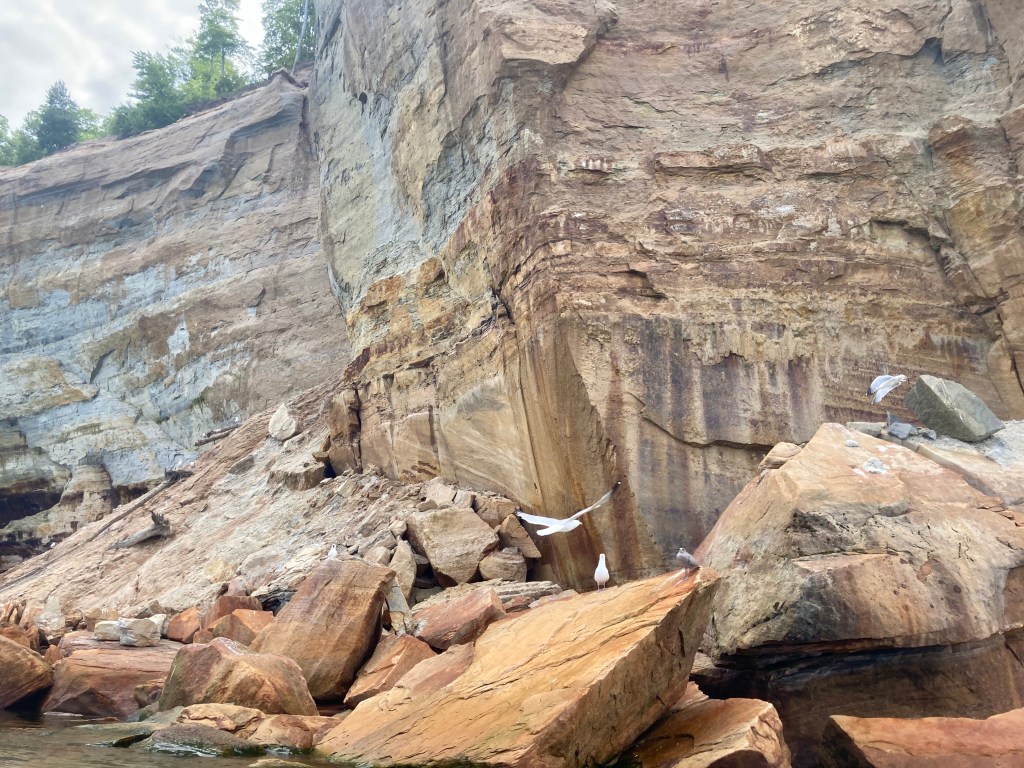
If you are planning to paddle the waters without a guide, I have a few tips that I snatched right from the National Park Service website. First, sea kayaks are required for paddling across Lake Superior; the longer, slimmer body of this particular type of kayak is more equipped for coastal waters. Shorter, recreational kayaks that you are probably more familiar with are used for gentler waters, such as inland lakes, rivers, and ponds. Sea kayaks are more stable, and the rudders allow for more control in the rougher waters. Second, canoes should not be used in Lake Superior. We saw a family of three paddling in a canoe four miles from the nearest beach, headed right into a looming storm. Had our guide not stopped them and told them that a storm was coming, they might have become stranded out there with no rescue service for hours. If you do want to use a canoe or smaller kayak, there are many beautiful inland lakes and rivers close by Pictured Rocks. Third, make sure you are equipped with the following before you launch: life jacket, whistle, wet suit (if there are cooler temperatures), spray skirt, paddle float, bilge pump, paddle leash, and marine radio.
For those of you who don’t feel like braving the unpredictable waters of Lake Superior alone, consider following in our footsteps and book a tour with Northern Waters. Our guide, Carl, was excellent. His patient and thorough training ability, sarcastic humor, and immaculate attention to safety made the trip unforgettable.
Our eight mile adventure began at Miners Beach. The minute we began dipping our paddles into the water, we were graced with 200′ high picturesque cliffs, otherwise known as Pictured Rocks. Pictured Rocks originally obtained its name due to the streaks of mineral stain that decorate the sandstone. Iron, manganese, limonite and copper deposits created the shades of red, orange, blue, green, white, brown, and black that trickle down the face of the cliffs, giving the appearance of a colorful, artistic painting or a massive canvas of natural graffiti.
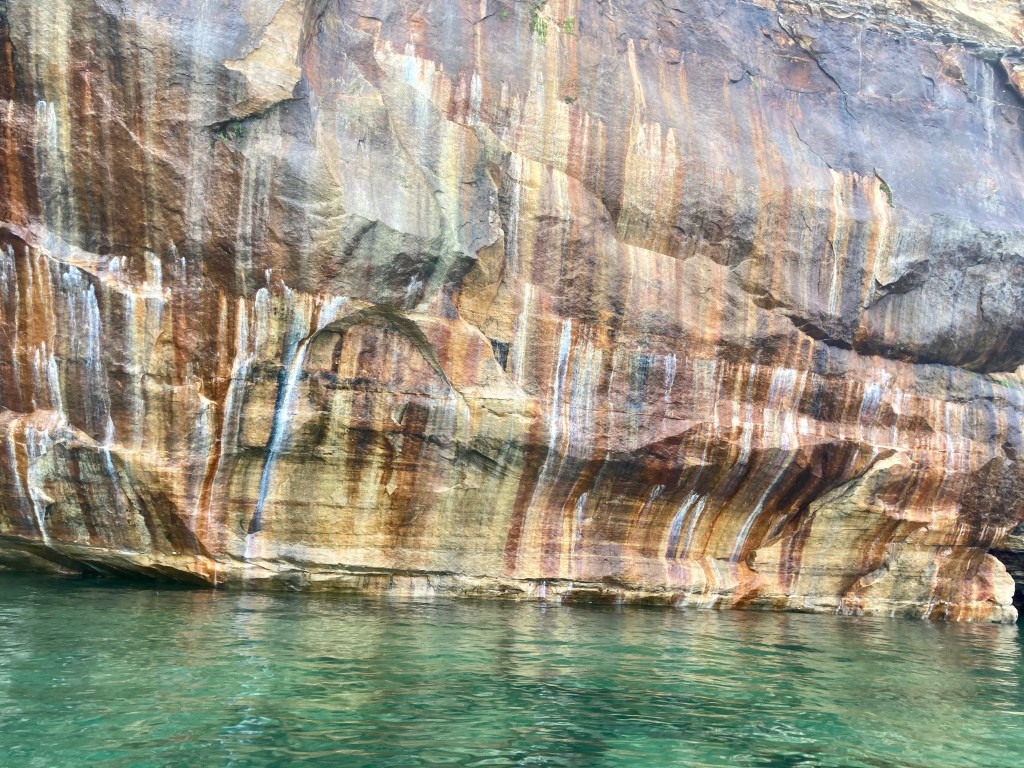
Around the first cliff bend, we tilted our heads to view a tall waterfall trickling down the edge of the sandstone. Appropriately named Bridalveil Falls, the slim cataract cascaded 140 feet down the slanted cliff wall into the lake below, looking quite literally like a bridal veil flowing in the breeze. This seasonal waterfall, which is the tallest in the entire state of Michigan, typically flows only after heavy rainfall or in the spring months after the snow has melted, but we were lucky enough to view this gem in all its flowing glory in the middle of summer!
Some other highlights that we passed along the lakeshore were Kissing Rock, Shipwreck Cove, Honey Pot, and Lover’s Leap Arch.
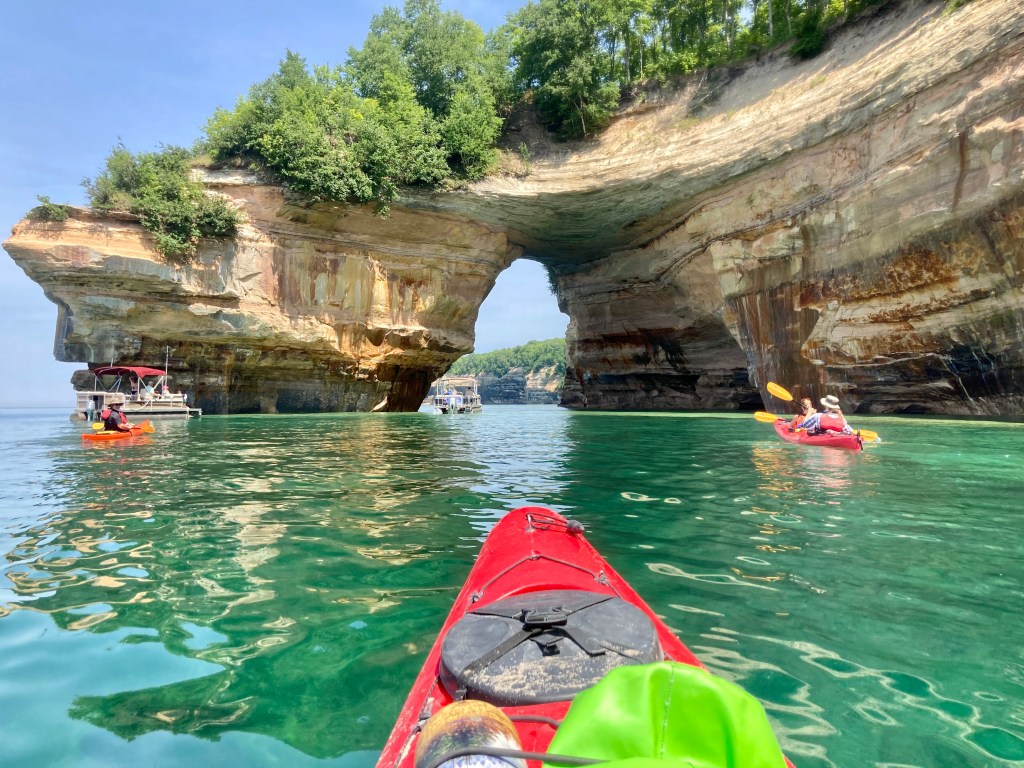
- Kissing Rock is a narrow passageway sliced between two massive rocks. We squeezed our way through the tight opening, laughing as we amateurishly bumped our long kayak into the rocks and scraped our paddles along the cliffs.
- Shipwreck Cove is a unique area of the shoreline. This section of the cliffs was given its name due to the shipwrecks that sat submerged at the bottom of the lake. Many of the wrecks need to viewed by scuba diving or clear boat tour in deeper water. But in this particular cove, we paddled around and over the wreckage in only ten feet of water, ogling at the ominous remains of just one of the thousands of ships that lie at the bottom of the Great Lakes.
- Honey Pot is one of the many sea coves that are etched into the cliffs. Natural waterfalls were flowing from the cliffs down into these nooks and crannies, allowing us to cool off by paddling directly underneath them.
- Lover’s Leap Arch is a massive natural arch carved into the cliffs; sea traffic is able to pass underneath it. Many legends swirl around this popularly-photographed spot. One legend is that a Native American woman jumped to her death from this arch after her husband failed to return home from a hunting excursion. Another myth centers around a couple who wanted to proclaim their love by jumping off the arch together. However, they didn’t realize that the water was only two feet deep, and therefore, they plummeted to their deaths.
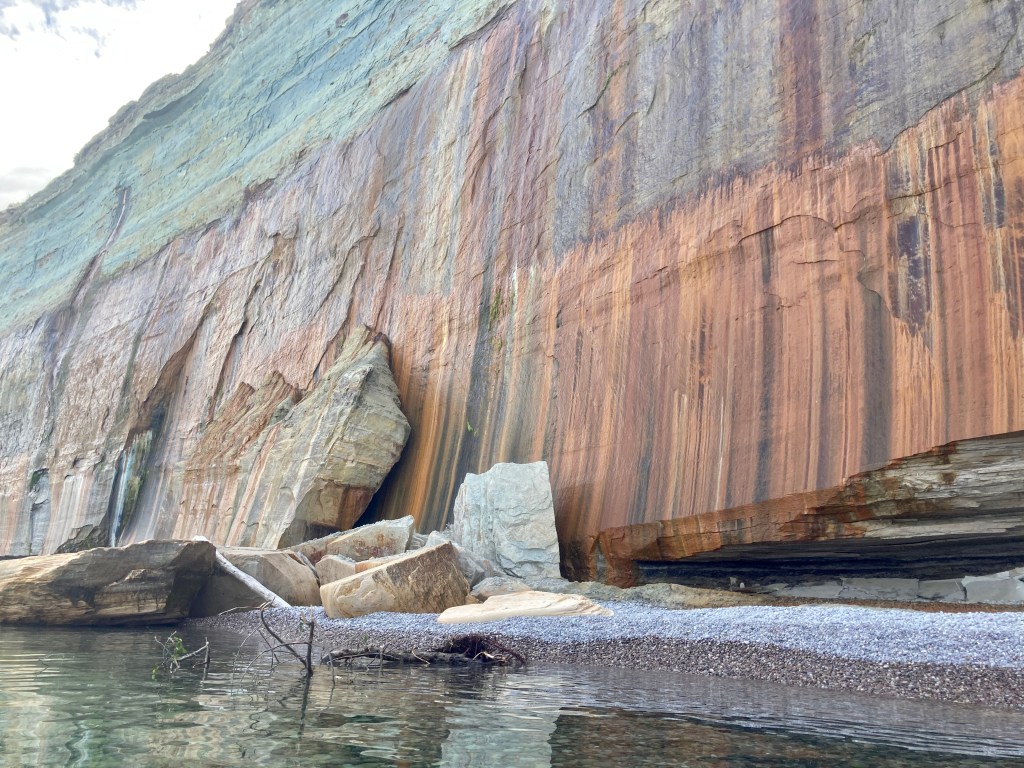
Paddling along the lakeshore gave us the opportunity to see many things that aren’t visible from the clifftops.
- A cobblestone beach stretched in between two jutted cliffs, tucked under a canopy of sandstone and maple trees. Its shore is entirely comprised of cobblestone with massive boulders flanking its edges.
- Streaked cliffs ribboned with vibrant colors, protruding from jewel-colored water.
- Impressive waterfalls flowing from the ledges.
- Sea caves chiseled into the sandstone.
Perhaps one of the most relaxing parts of the water adventure was the pitstop we made at Mosquito Beach. This beach is quite popular on the west end, but the east side, where we ate lunch that afternoon, was deserted. Once we docked our kayaks on the rocky shore and stepped out of our spray skirts, we were given freedom to explore the beach, eat our lunch, and swim. Even though Lake Superior is the third largest lake in the world and decidedly the coldest of the Great Lakes due to its vast depth, its waters were refreshingly welcoming in one of Michigan’s rare high-temperature days. The turquoise water glistened in the mid-day sunshine, drawing us in to its crisp glory.
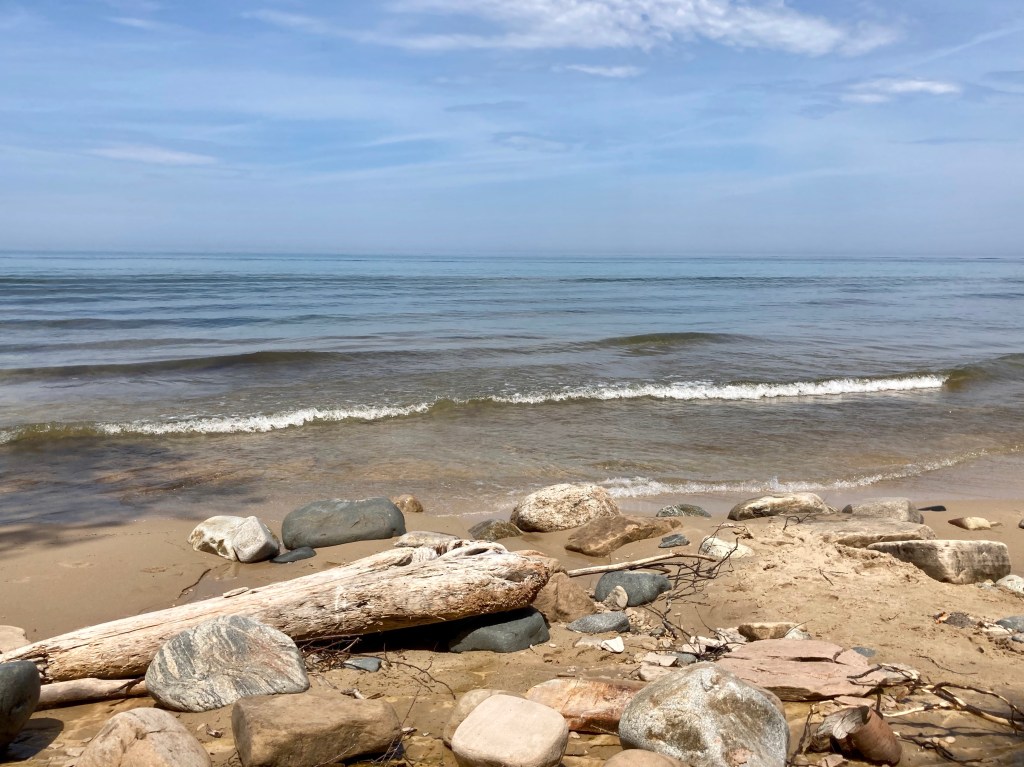
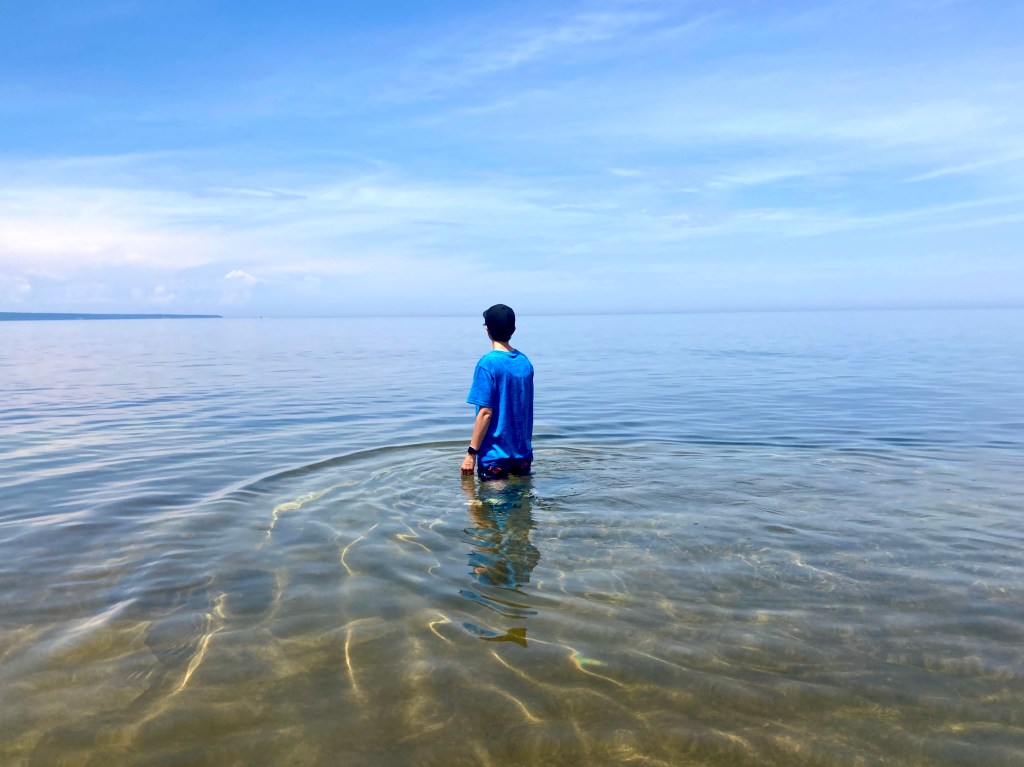
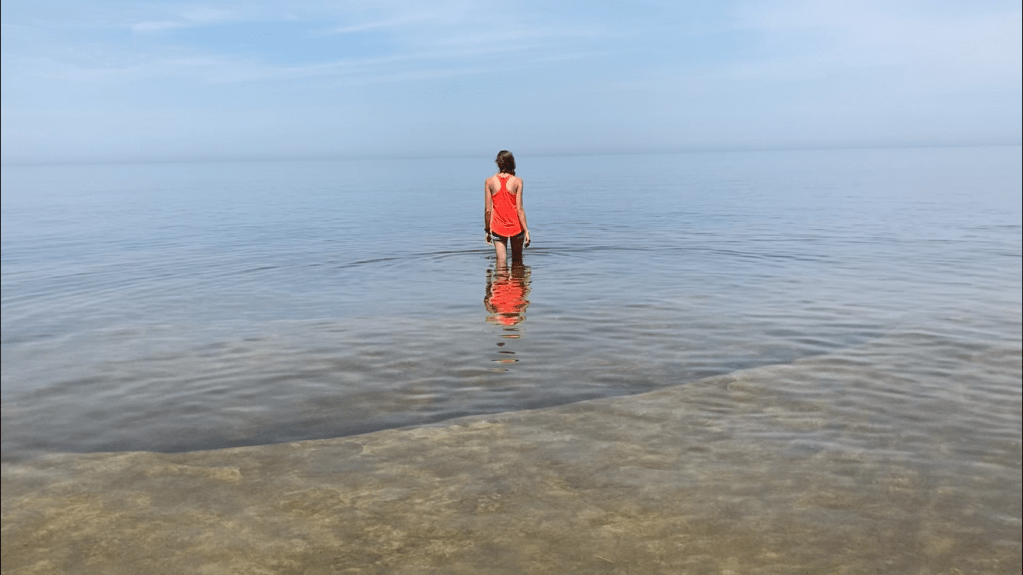
The four miles back were a bit more difficult, as we didn’t take many breaks due to a storm brewing behind us. The urgency to get back to shore was quelled about a mile down the shore, when the storm warning was pushed back. We once again were able to paddle leisurely and soak in the waterfalls that dripped from the cliff ledges.
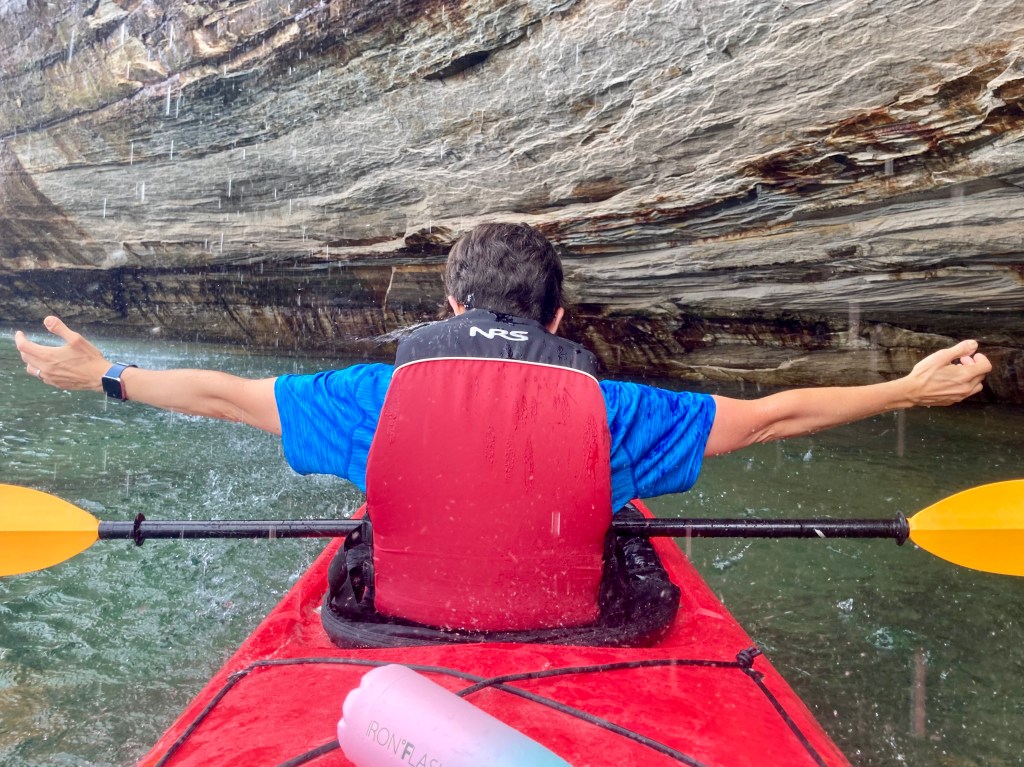
After the short hike back to the shuttle and once we were buckled in, the rain began to pour. Thunder roared; lightning pierced the darkening sky. Raindrops pelted the van windows as relief washed over us. We made it just in time! The kayaking adventure couldn’t have been more perfect. It was sunny, warm, and a little breezy to relieve the heat. The waterfalls were flowing, which is a rarity in Upper Michigan at this time of year. The storm clouds didn’t begin rolling in until we were almost done; and the rain didn’t begin until we were safely inside the vehicle.
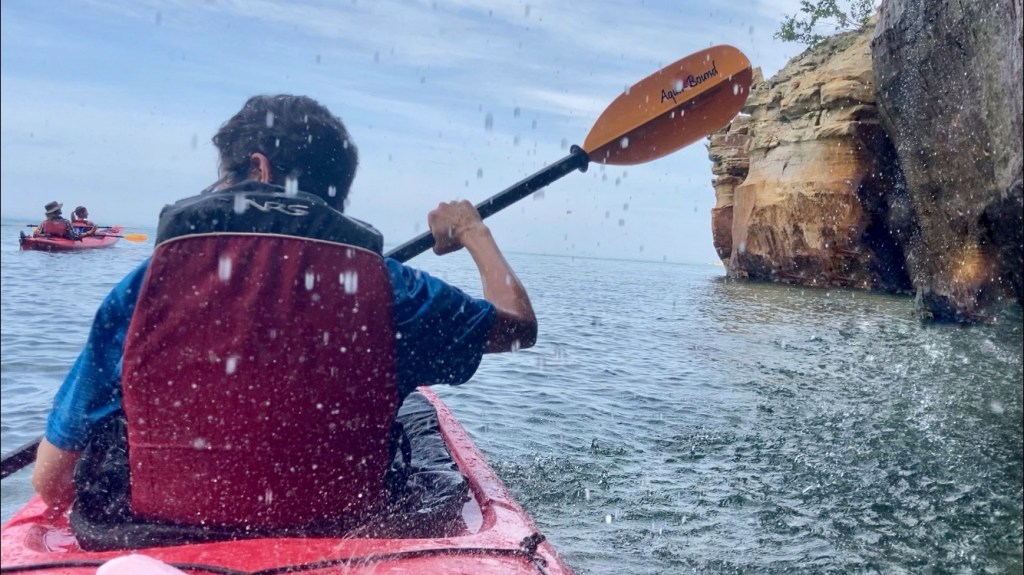
So if you’re at all adventurous and these low-resolution iPhone photos even slightly pique your curiosity, consider visiting this lakeshore in person for truly remarkable sights. It’s a trip you will never forget!
 Wonder. Wander. Repeat.