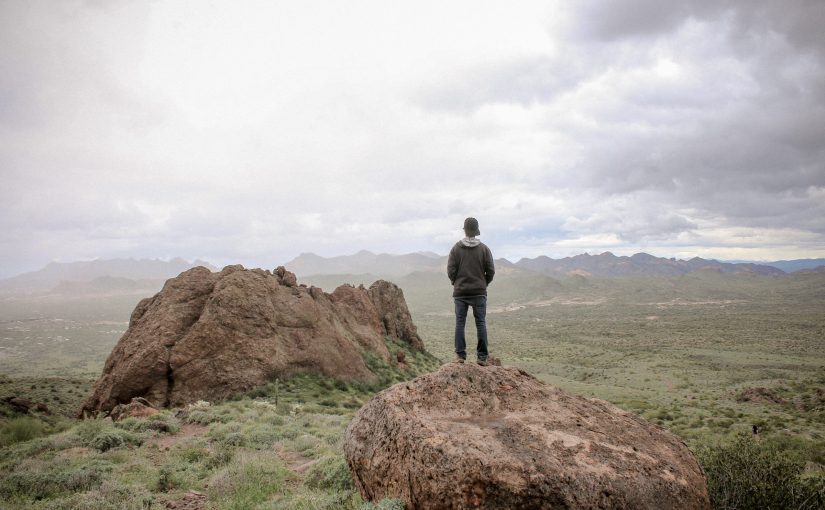
Comfort is absolutely essential while hiking. Everything from sunglasses and hiking boots to layers and outerwear need to be considered before you set foot on the trail. My first official hike was in the summer of 2015. I have a post detailing this wild adventure here, but to say I was underprepared would be an understatement. I was a beach girl up until that point in my life; suntan lotion and flip flops accompanied me on my ideal, saltwater-speckled vacation. But for our honeymoon, we decided to step out of our comfort zone and into the backwoods. That being said, we weren’t prepared for everything that hiking entails. Had we started on a more moderate trail (or say, not a National Park), we might’ve come out unscathed. Don’t get me wrong; the cuts, the bruises, and the ruined shoes were all part of the unforgettable experience that caused our passion for hiking to bloom. My low-rise Converse sneakers, jean shorts, cotton tees, and massive camera bag looped around my shoulder with unnecessary gear that accompanied me on that trip most certainly would not prove to cut it on the trail. Alas, we miraculously pushed through and conquered one of the most difficult trails in the Smoky Mountains!
What to Wear While Winter Hiking
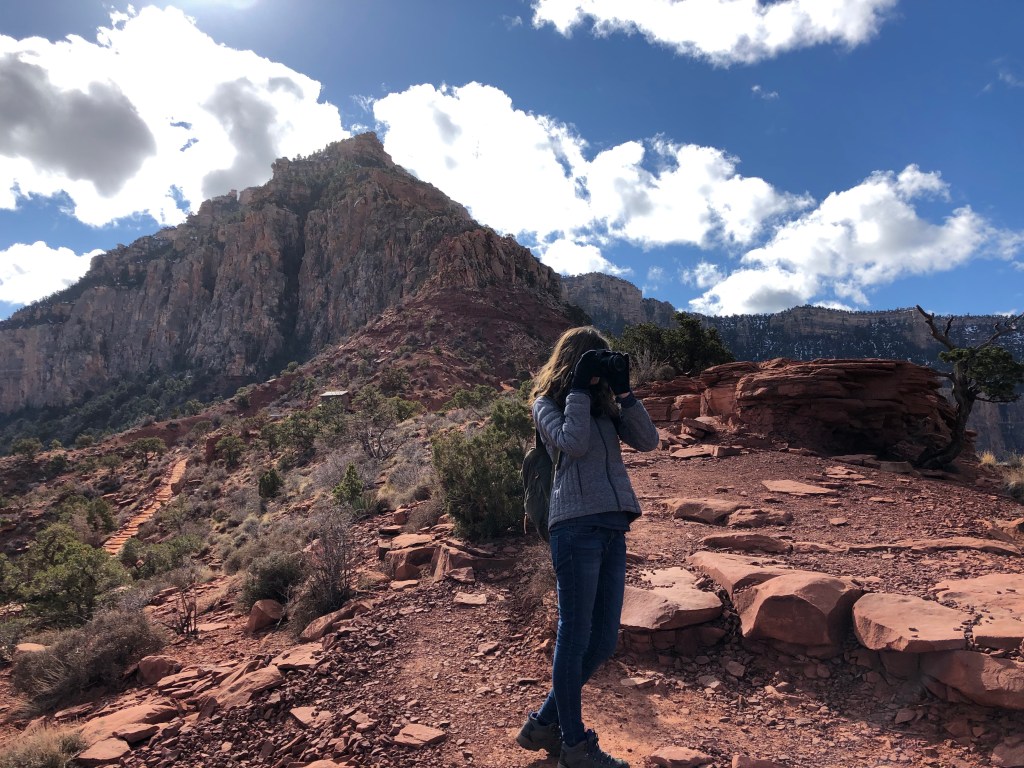
When planning what to wear while hiking, first, consider the conditions. During the winter months, it’s essential to layer up. It’s better to have more layers than too few; you can peel them off as you hike, if desired. Typically, when I’m hiking in subfreezing temperatures, I end up shedding layers, but during the first mile or two of the hike, you will be grateful for the extra weather protection.
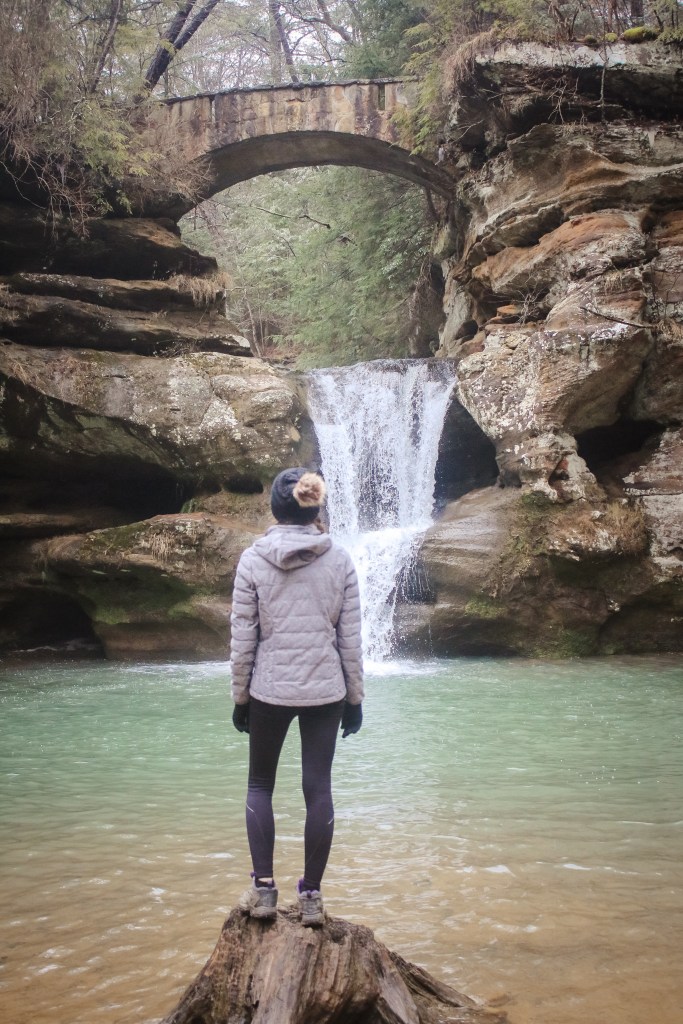
The key to winter layering is threefold: base layer, middle layer, outer layer. A base layer should be a wicking fabric that absorbs sweat, such as polyester or nylon. Wicking fabric is actually a necessary base layer for both cold and warm conditions; in both conditions you will sweat, and this layer will absorb the inevitable perspiration. A middle layer should insulate, which will retain your body heat and keep you warm. Examples of a middle layer include, but aren’t limited to, polyester fleece or a down jacket. The insulation should ideally be thick, designed to protect your body from the cold and windy elements. Lastly, an outer layer should protect you from wind, rain and snow. This is typically a rain jacket and pants: waterproof or water resistant, and breathable. Waterproof coats will cost a bit more, as they are designed to protect you from all elements; water resistant will work for light rain or wind, but might not keep you one-hundred percent dry.
Wearing the correct footwear while winter hiking is equally important. I’m not sure about you, but my feet are always cold, no matter the temperature. So when it comes to hiking in subfreezing temperatures, it’s crucial that I am wearing socks and boots that will keep my feet warm and cozy. I’d recommend investing in a nice pair of thick, wool socks and insulated, waterproof boots. Darn Tough and Smartwool are both high quality sock brands; Merrell, Keen, and Columbia are brands to consider for boots. REI, LL Bean, Backcountry, Eddie Bauer and Mountain Warehouse are good websites to start browsing.
What to Wear While Hiking in the Rain
Ah, rain! The weather that no one seems prepared for out on the trail. I constantly walk by hikers who are caught off guard by the sudden downpour and scramble to find shelter under a tree. When you’re about to set foot on the trail, make sure to check the radar and be prepared for that sudden rain that could fall out of seemingly nowhere. The same three layers (base, middle, and outer) apply to rainy weather hiking. Lightweight wicking base layers, lightweight fleece jacket and synthetic hiking pants, and lightweight/breathable rain jacket and pants. Basically, wear what you would while winter hiking but a little bit lighter material. Temperatures will be above 30 degrees when rain is in the picture, so don’t overdo it.
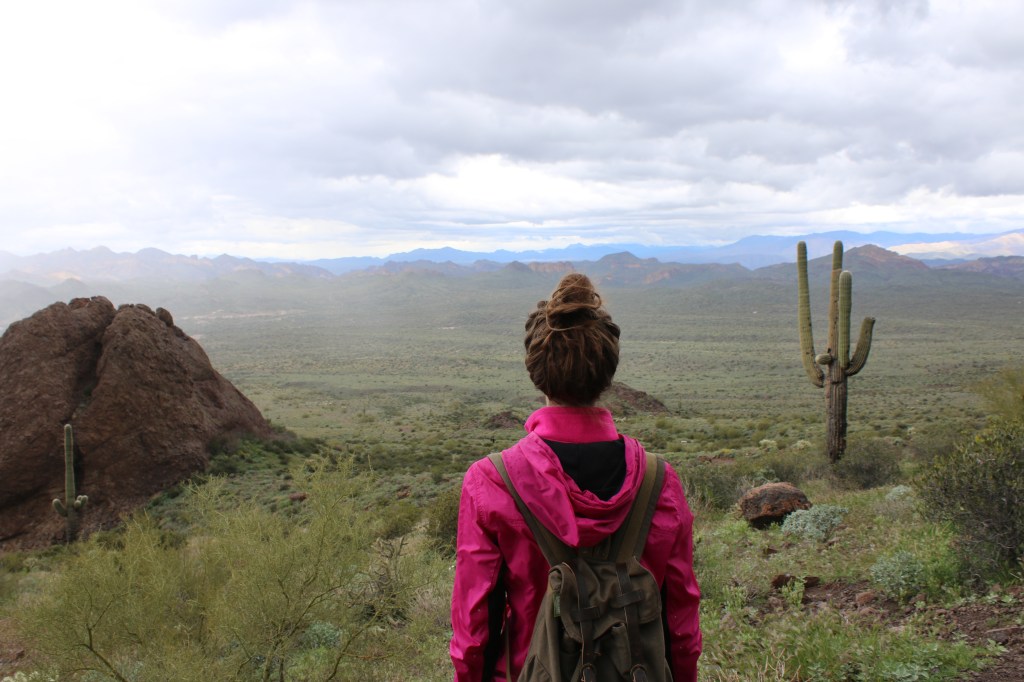
As for footwear, I’d stick with your winter gear (wool socks and waterproof boots), but depending on how cold or warm your feet usually get or what the outdoor temperature is, you may want lighter socks.
What to Wear While Warm Weather Hiking
Typically for warm weather hiking, I only wear two layers on the top and bottom: base and outer. For my base layer I wear wicking underwear and a sports bra. For my top layer, I wear a breathable summer top and either polyester shorts or leggings. Cotton also works, but can get uncomfortable if you start sweating profusely, so it all depends on your body and comfort levels. Personally, I wear cotton and wicking materials interchangeably. If the wind picks up or there’s a slight chill in the air, I’d suggest wearing a lightweight wind jacket. Some people do wear a middle layer in the summer, depending on their body’s comfort level. If you do wear a middle layer, try adding a lightweight fleece.
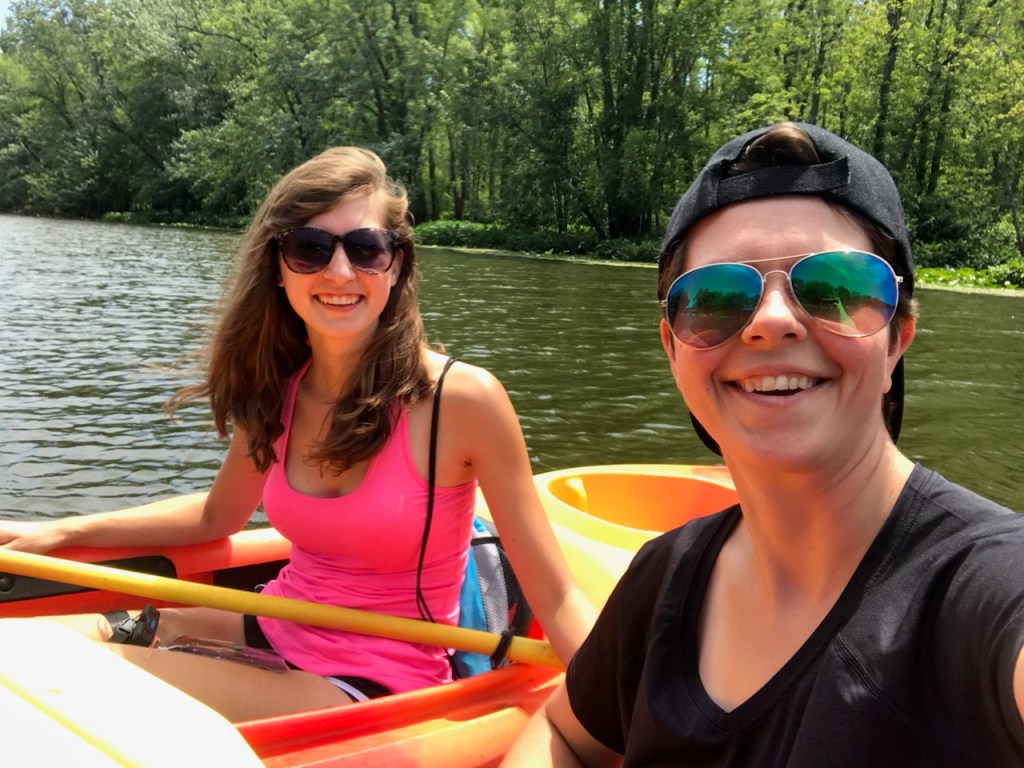
When it comes to footwear, I wear the same boots but different socks. It may sound crazy, but experts suggest keeping the wool for summer. Smartwool makes shorter, lightweight socks perfect for warm weather hiking; the same material that keeps you warm in the winter will keep you cool in the summer by absorbing sweat through evaporative cooling. The moisture gets pulled from your skin and released into the air, allowing your feet to breathe and remain cool. No one likes to be sticky and sweaty while hiking, least of all your feet. Contrary to popular belief, cotton is not ideal for hiking in any weather. This came as a shock to me because that’s all I used to wear in the summer. I couldn’t see how wool would keep me cool in the warmer months, so I stuck with light, cotton socks. But these leave your feet exposed to the threat of inevitable blisters due to the harsh material rubbing your skin with each step. Also, sweat will drench your feet, and the cotton will absorb it, not wick it.
Protecting Your Extremities
When the temperatures are frigid, make sure to protect your extremities. I’ve covered feet, but let’s now move to hands and ears. Polyester, waterproof gloves and a beanie or earmuffs are recommended. Consider layering a lightweight pair of gloves with a heavier, waterproof pair for added protection against the elements. Slide hand warmers in your gloves for extra warmth!
More on Hiking Boots
Personally, I wear the same hiking boots year-round, no matter the temperature. Though there are a dizzying array of different types of boots, I like to keep things simple. My boots are waterproof, so snow and rain can’t seep through, and they keep my feet at an ideal temperature no matter the weather. A lot of hikers change their boots depending on weather and season. I see hikers wearing trail runners in the summer, while they save their heavy-duty, waterproof boots for the colder months. It’s all about personal preference, so I’m not going to persuade you one way or another. I will, however, present you with a few facts on the different options you will see when you browse the stores or websites:
Trail Runners: These are popular among thru-hikers, resembling a lighter-weighted tennis shoe, but in actuality containing insane durability for the most extreme conditions. REI explains what trail runners are in more detail, and how to choose the correct kind.
Hiking Shoes: These are low-cut, ideal for day hiking. Ankle support is lacking, but they are more lightweight than boots.
Hiking Boots: Ranging from mid to high rise cut, boots are the most popular option among hikers. They offer ankle support, but aren’t recommended for thru hiking.
Backpacking Boots: These are high-cut, durable boots designed for longer hikes. They provide excellent support, but aren’t ideal for shorter hikes as they are heavier than regular boots, shoes and trail runners.
When you pick the type of boot you want, it’s then time to decide if you need any special features. Special features would include insulation, waterproof membranes, heel brakes, and crampon capabilities. If you are a day hiker or amateur walker, you don’t need anything fancy. Waterproof membranes and possibly insulation would be recommended but not entirely necessary. Keep in mind what temperatures and weather conditions that you will normally be hiking in and go from there. Remember, the hiking boots you buy first don’t have to be your last pair. I’ve gone through two pairs in three years, and I am ready to buy my third pair this year. Your boots may wear out; they may not be ideal for the type of trails you want to hike; they may cause blisters to bubble. I started out with Converse and graduated to mountain boots; we’ve all got to start somewhere!
Miscellaneous
Shielding your body from the intense UV rays are important, especially when you’re out of the woods and exposed on desert terrain. Those unforgiving rays can have damaging effects on your skin. To prevent the harmful rays from damaging your skin, consider wearing SPF 30 (or higher, depending on your skin tone) sunscreen, 100% UV protection sunglasses and a wide-brimmed hat to shield your face.
TREKKING POLES
If you’ve done any backwoods hiking, it’s likely that you’ve passed hikers with trekking poles around their wrists. These poles are highly debated in the adventure community. I know my wife and I have researched and debated about whether or not these poles are necessary, and if that’s something that we’d ever be interested in. Here’s what my research yielded:
PROS:
~ Reduce strain on knees
~ Improve balance
~ Establish an even pace/rythmn
CONS:
~ Increased energy is exerted
~ Increased chance of injury if a fall occurs (due to wrist restraint)
~ Tips can damage rocks and plants
As you can see, the results from my research yielded an equal amount of pros and cons. In the end, however, we decided against them. The main reason we don’t hike with poles is because we frequently hike with our dogs. Another reason is the increased energy exertion, especially when hiking uphill. We are young and are blessed with healthy bones and muscles. Since we are careful with our bodies, walking without them is the right decision for us at this point in our lives. Weigh the pros and cons carefully, figure out the terrain that you will most frequently be hiking, and make a decision that’s right for you and your body.
I hope this post helped you when deciding what to wear. I want to give a big thanks to REI, who originally provided me with all kinds of advice that got me headed in the right direction!
Happy hiking!
 Wonder. Wander. Repeat.