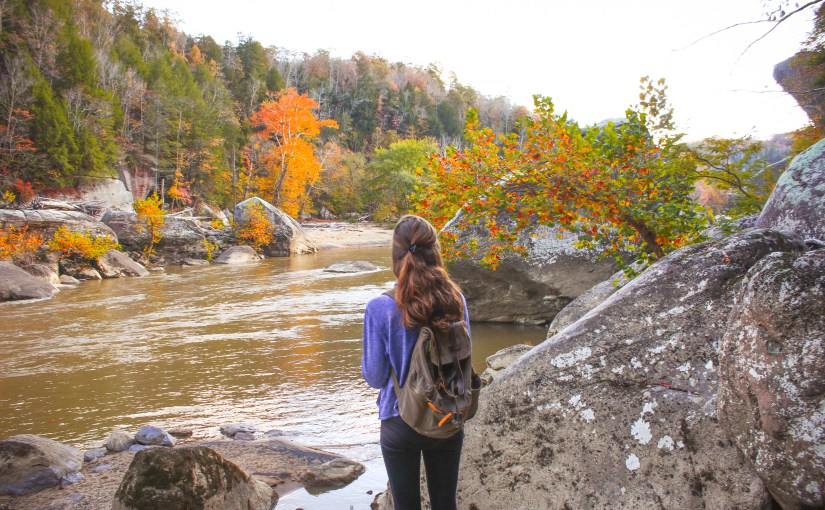
Day hiking requires less essentials than overnight backpacking, but the list of necessities for day hiking isn’t short by any means. With overnight backpacking comes the added need for shelter, additional food, cooking supplies, etcetera; but for this post I am going to focus on day hiking and what items are in my hiking bag when I set foot on the trail.
For starters, let me just say that I have gone through several hiking bags, and the one that I keep going back to is the Lake & Trail hunter green canvas backpack. This brand is regional and not available everywhere. Don’t let the simplicity and unrecognizable name fool you: it has proven to be extremely durable, weathering the Grand Canyon’s dry desert to the Smoky Mountain’s dewy landscape. The bag is water repellant and contains plenty of zippered compartments to evenly store all my belongings. My wife carries a Teton 18L Oasis Hydration Pack. This bag evenly distributes the interior weight with an adjustable strap and comfortable mesh covering. A 2L water bladder is included.
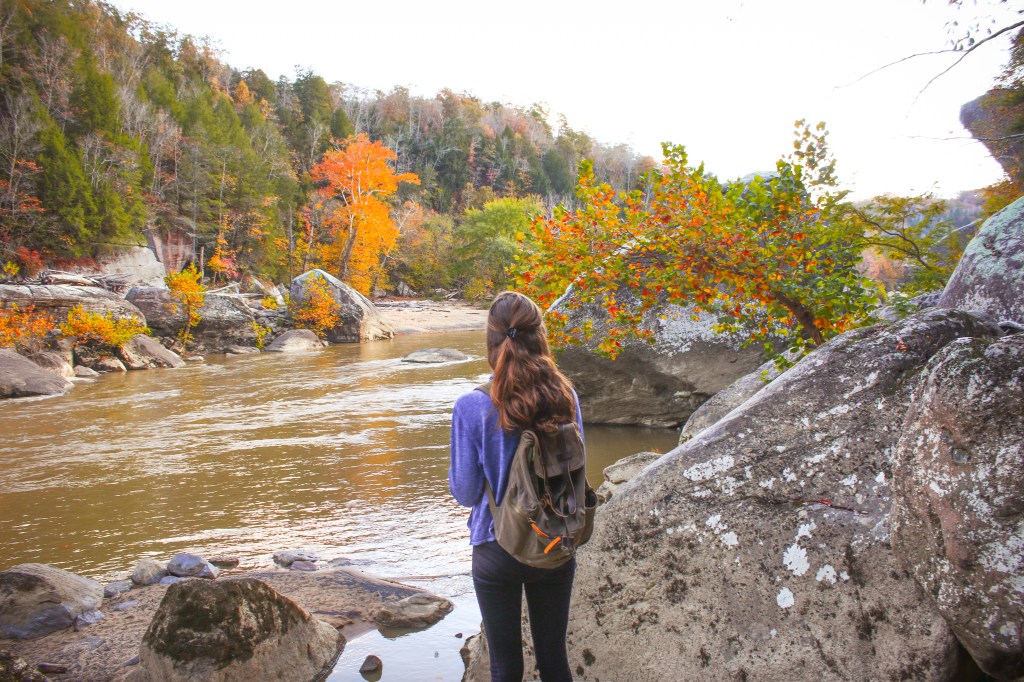
Here’s what you’ll typically find inside my hiking bag:
LIFE STRAW
A Life Straw is a filter that allows you to drink directly from any water source safely. The water filter removes 99.99% of waterborne bacteria, and its ultralight weight and quick efficiency makes it an easier alternative to iodine tablets, and a lighter option to slip in your pack. Filtering up to 1000 gallons of water safely, you’ll probably never need to replace it; so the one-time fee is worth it.
This is 100% a necessity for ALL hikers! A variety of circumstances can lead you to needing this: forgetting water, not bringing enough water, getting lost, spilling your water, underestimating the length or strenuosity of the trail and therefore, requiring a larger amount of water. Though I didn’t start carrying this in my bag until December 2019, I definitely could’ve used it when I was hiking the Grand Canyon. It’s easy to underestimate the amount of water you might need in the desert, even in early March. It never hurts to be prepared!
PEPPER SPRAY
Pepper spray is super important in the woods, especially for women. Every day hikers around the world are falling victim to attackers. Even if you lack the physical strength or special skills to attack the predator, a simple spray from a bottle hung on the outside of your bag will momentarily confuse, startle and delay the attacker, allowing you to make an easier escape. Though I hope to never have to use this, I will always have it hung on my backpack.
WHISTLE
I recently added a whistle to my emergency kit after reading a fellow hikers’ blog. I now have it hung on my backpack in case I find myself in a precarious situation and need help. A whistle requires less energy than screaming, and is much louder.
HEADLAMP
A headlamp is also another new item I have added to my backpack. Up until this point, I’ve had a small flashlight, but a headlamp is the much more practical and efficient alternative. A headlamp is brighter and most importantly, allows freedom to navigate through the woods without having to hold a flashlight in your hand. You might never intend to hike in the dark, but becoming lost or underestimating the length of the trail can lead you to hike at times you weren’t prepared for. Be prepared with a hands-free, bright light that will navigate you safely through the woods.
FIRST AID KIT
I’ve found that most hikers just like to carry a simple, makeshift first-aid kit. They just carry the basics like bandaids, antiseptic, and pain relievers because they don’t want to carry a bulky kit with things they probably will never use. This is a great option if you mostly day-hike on short trails or won’t be very far from your car or a town. Personally, I carry two full first-aid kits when I travel: one is for my wife and I and gets tucked into my hiking bag; the other is for my dogs and gets slipped into their travel bag. Our first aid kit is perfect for hiking and camping because it’s tight, compact, lightweight, and contains everything we’d ever need in case of emergency. This 200 piece first aid/survival kit contains things like bandaids, gauze pads, a fire starter, alcohol prep pads, antiseptic wipes, first-aid tape and scissors, thermal blanket, and signaling mirror. I added bug spray and ibuprofen to my kit. If you’re taking your pets onto the trails, one item to add to your first aid kit would be a tick wrangler.
CAMERA GEAR
Ah, my favorite item in this bag! My beloved Canon. I carry a Canon 70D camera around my neck at all times, so it’s almost never inside my bag. Depending on the trip, I might carry extra lenses in my bag, but I typically just bring one. The lens that will soon accompany me at all times will be the 16-35mm f.4. For now, I use a 50mm or 18-55mm. If you’re a photographer on the trails like me, I’d suggest keeping your gear as minimal and light as possible. I researched lenses for hours to figure out the best one that met my needs. My ideal lens might be different than yours, but make sure to keep it light! Camera gear adds tremendous weight around both your neck and back. Having one lens that can do everything you need it to do will be super helpful; your back and neck will thank you!
I carry my iPhone, too, of course, for emergency and GPS purposes, but I am team Canon all the way when it comes to landscape photography. Preserving the memories made on the trail is incredibly important to me. I want the photos to be top quality when I arrange them in my scrapbooks; when I look back on the photos of our trips, I can recall exactly what I felt in that moment, sense exactly what the air smelled like; and I am instantly transported back to that exact moment in time, where a frozen photo magically turns into a 360 degree panorama in my mind’s eye.
DOG SUPPLIES
If we’re not backpacking through a National Park or traveling across the country, we will almost always have our dogs with us! If the trail allows pups, we will bring them with us because they love adventure as much as we do! When it comes to supplies, we fill their designated travel bag with an AquaDog, collapsible bowls and food, first-aid kit, leashes, harnesses, an old towel to wipe their dirty paws, coats/raincoats, and waterproof booties. As for what we bring on the actual trails in my hiking bag, I usually just carry their AquaDog water bottle, which is a squeezable water bottle that fills an attached bowl with water. The water that they don’t drink dispenses back into the bottle for the next use, so no water is ever wasted. It’s leakproof, so it can easily slip into my bag!
ZIPLOC BAG
I am apart of an all-girls adventure group on Facebook, and not only do we all get to share our adventures and beautiful photos, but helpful tips and thoughtful advice are always thrown around. One of the things this group is passionate about is “leave no trace.” Not only picking up after you and your dogs, but also picking up after negligent hikers. Whenever I see trash on the trail, my first instinct is to pick it up, but I never had anything to put the trash in. A member of our group suggested carrying along a Ziploc bag to seal trash inside and disposing of the contents properly outside the park. So we’ve started carrying a quart-sized Ziploc bag to collect trash we may see along the trail and dispose of our own trash, such as protein bar wrappers and apple cores. We can make a difference, one piece of garbage at a time!
HYDRATION & ELECTROLYTES
While hiking, you exert quite a bit of energy, especially if the temperature is high, the path is steep, and your sweat glands are working overtime. To refuel my body, I keep a packet of sugar free Propel powder to mix into my water bottle. Propel is enhanced with electrolytes, so it will rehydrate your body and replace what you lost when you sweat.
As for basic hydration, I keep my water ice cold in an Iron Flask stainless steel bottle easily accessible in a bottle sling. These water bottles keep beverages cold for up to 28 hours and hot for up to 12, making it the perfect companion for any weather you may encounter on the trail.
SNACKS
Snacks are super important when on the trail! For day trips, we usually pack a cooler with our lunches and drinks, and a separate, smaller cooler for dry snacks. Both of these get left inside the car, but no matter the trail length, we will slip some kind of snack into our bag. It’s not fun to be hungry on the trail because you will quickly lose energy, and the simple motion of walking will become much harder, especially if the trail conditions and weather aren’t ideal. Our hiking snacks include lots of nuts–almonds, soynuts, peanuts, and cashews– apples, protein bars, dried veggies, cheese, veggie straws, and cauliflower crackers.
NAVIGATION
We’ve all had a moment where we thought we were lost, or at the very least, disoriented. The trail forks and you don’t know where to go, leading you to a new path entirely or no path at all. Getting lost can have a major ripple effect: it can cause you to panic, which in turn dispenses your much-needed energy and concentration. It can cause you to be out on the trail longer than anticipated and therefore, not have the correct amount of food or water. Though you may be carrying a LifeStraw, if there is no water source– a river, stream, lake or puddle–it won’t be of any help to you. So that’s where navigation comes in handy. Thru-hikers tend to recommend expensive satellite GPS tracking devices that can send pin drops to loved ones to let them know you’re safe and doing well; for the purposes of day hikers, I’d recommend either purchasing AllTrails Pro or carrying a compass or trail map. Trail maps aren’t always available at the trailhead, so downloading them for offline viewing later is always helpful. As for AllTrails, even without the Pro upgrade, I can typically pull up the trail map and see a live look of where I’m at versus where the trail is, allowing me to correctly navigate myself back to the right area. As for a compass, I do carry one of those in my bag, but I’ve never had to use it. I can almost always rely on AllTrails, a paper trail map, a downloaded offline map, or a digital trail screenshot that I captured from the park’s website. But phone batteries can die, and signals can disappear, so a good ole’ paper trail map and compass will do the trick.
MISCELLANEOUS
A few of the miscellaneous items that I will carry with me are sunglasses (usually perched on my face), ID, and hiking journal. First, sunglasses–on or off the trail– are important so that you don’t strain your eyes; headaches brought on my strain that could’ve easily been prevented aren’t fun. Make sure your glasses have 100% UV protection. Second, it’s important to carry your ID with you in case, God forbid, something happens to you. If you become unconscious and are in need of emergency rescue services, it’s important that the first responders are able to identify you. Third, though not a necessity for everyone, is a hiking or travel journal. I write about each of my adventures so that those memories are preserved. And when I go to scrapbook photos of our travels later, I can look back on the travel journal in case I’ve forgotten the name of a trail or waterfall. It’s just like a regular journal, but specifically for all things adventure. There’s nothing better than being able to capture a moment with both a photo and a paragraph of vivid words that transport me back to that very moment.
Things that I don’t carry in my bag, but rather are on my person will be on a future post! I will discuss footwear, layering, my opinion on trekking polls, and more! Also, be sure to be on the lookout for a camping/overnight essentials post, where I will discuss all things tents, cooking supplies, and more.
I hope this post helped prepare you for your next hiking adventure! Remember, you may require more or less than I do; it’s all about finding out what your specific needs are. Learn from your past experiences and amend your supply list based on your needs. The only way to find out is to get out on the trail and start exploring!
 Wonder. Wander. Repeat.