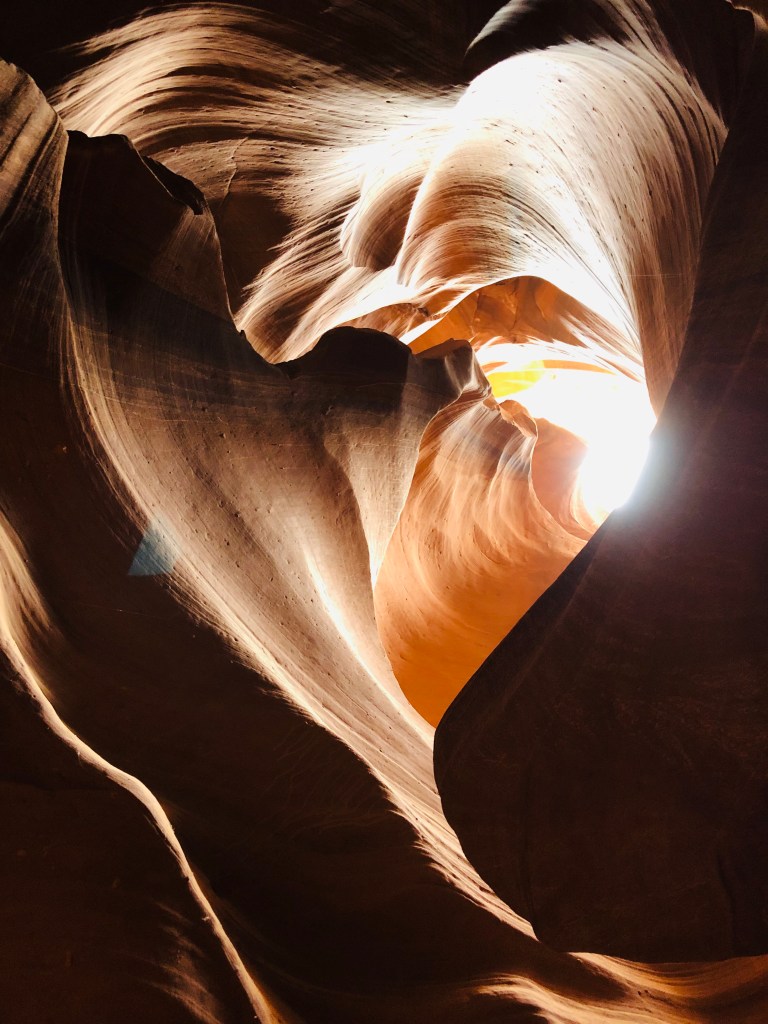
If you know anything about Antelope Canyon, you are probably familiar with its orange, wavy, rocky interior. The canyon walls were formed by sandstone erosion due to flash flooding. The only way to explore the canyons on foot are by guided Navajo natives. However, you can enter the canyon by water. We decided to do both.
The canyon is divided into Upper and Lower slot canyons. Both are available to tour through various companies in Page, Arizona. The town of Page is quite small, but is packed with so many breathtaking formations, Antelope Canyon and Horseshoe Bend being the most visited. Page is often overshadowed by its distinguished neighbor, the Grand Canyon. So let me walk you through our journey to Antelope Canyon and convince you to add this magnificent wonder to your Arizona bucket list.
Upon arrival to Page, we rented kayaks. We dropped the kayaks in at a boat launch in Lake Powell at Glen Canyon National Recreation Area. Lake Powell is actually part of the Colorado River. Strapping the kayaks in our rental truck, we cruised through the deserted roads and once we reached the boat launch, we noticed that the sun was shining and the river was glistening, inviting us to dip our paddles into the water. Sunglasses perched onto our noses, bathing suits donned, and snacks stowed in our waterproof bags, we set off on our journey.
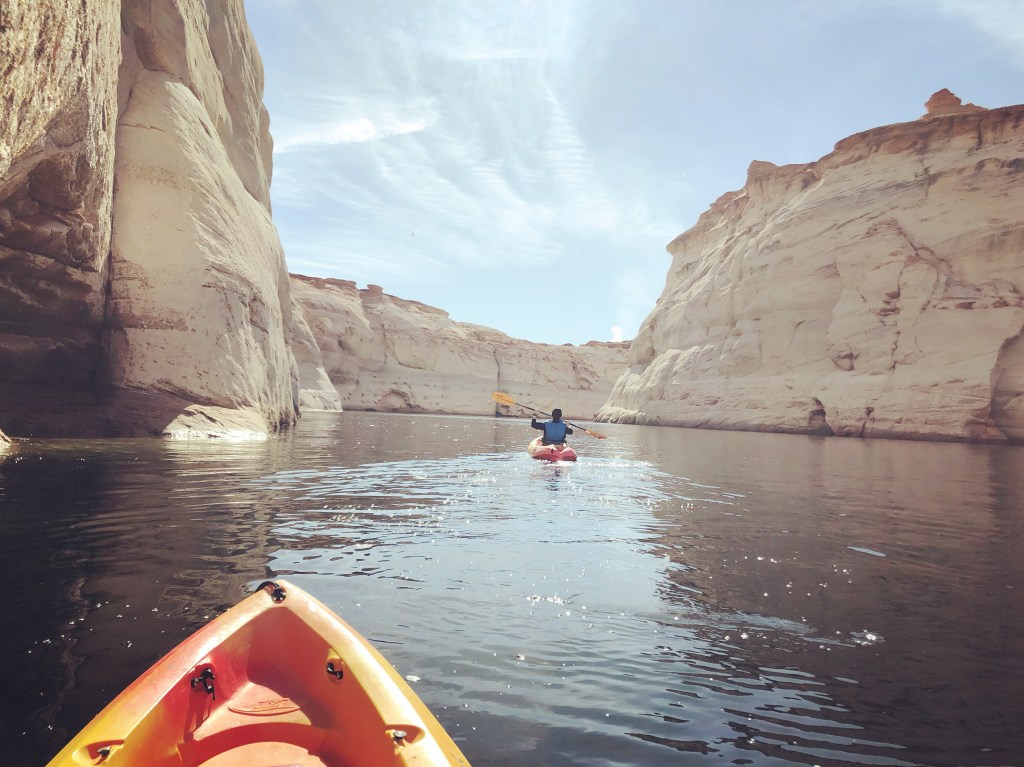
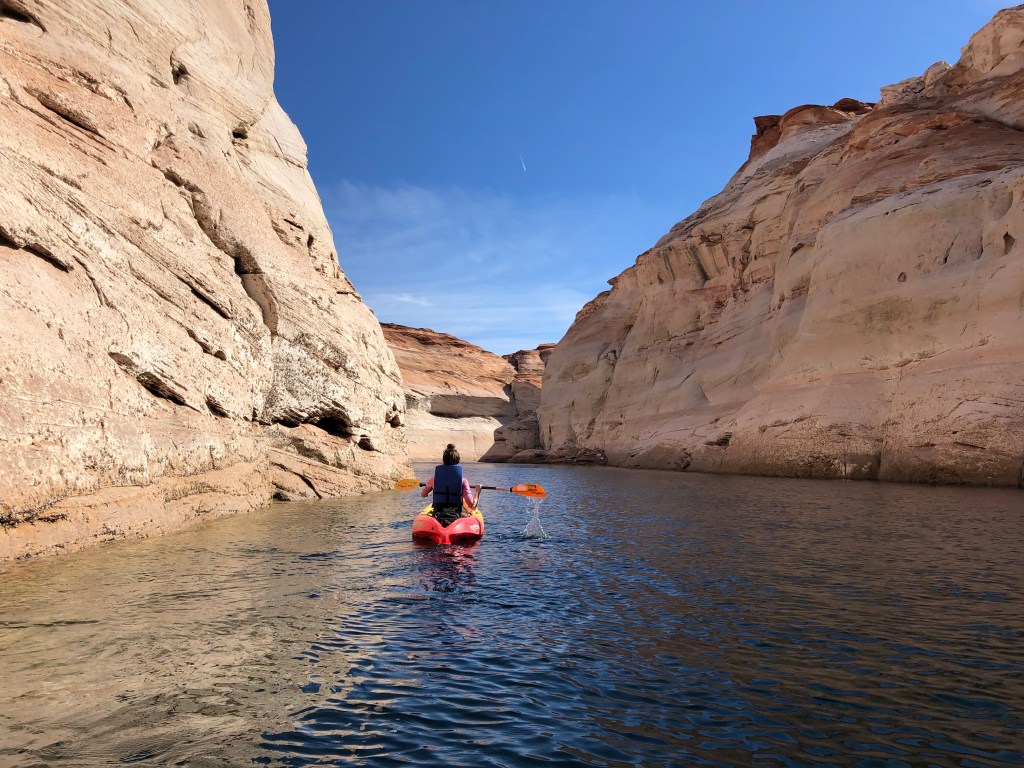
A little fact about the Colorado River that I’m glad that I didn’t know beforehand is that around Antelope Canyon, it can get as deep as 300 feet. On the 3 mile path that we kayaked through, we only saw two fishermen, three kayakers and a tour boat. One guided group launched just before we did, but other than at the launch site, we never saw them again. Other than those few people that we saw, we had the entire river to ourselves. The quiet atmosphere would’ve been eerie had it not been for the sunlight streaming onto our faces. The calm glow of the early morning sunshine created a beautiful aura as we paddled. I highly recommend going at the time of year and time of day that we did: early March and shortly after sunrise.
Once we reached the canyon, the river narrowed tremendously. The only audible sound was our paddles dipping into the water as we aimed our gaze upward at the towering, orange walls of Antelope Canyon. We took a break to munch on snacks and soak in our surroundings. This was definitely a once-in-a-lifetime moment that would likely not be repeated in the future. The fact that we had the canyon to ourselves, with no one to interfere with this beautiful moment, was amazing. Snapping both mental pictures and real photos, we made our way back. Had we had more time before our walking tour of the canyon, we would’ve dragged our kayaks to the shore and hiked through the canyon.
After our kayaking adventure, we checked in to our tour. We chose to tour Upper Antelope Canyon with Antelope Canyon Tours. Getting to the canyon was an adventure in and of itself. We embarked on an off-road adventure. An open-air bus with monster tires wound its way through the middle of the desert, dust kicking into our faces. The sand swirled in the air as the tires spun through the terrain. Squinting our eyes and shielding our mouths and noses from debris, we passed tons of wildlife and sturdy vegetation.
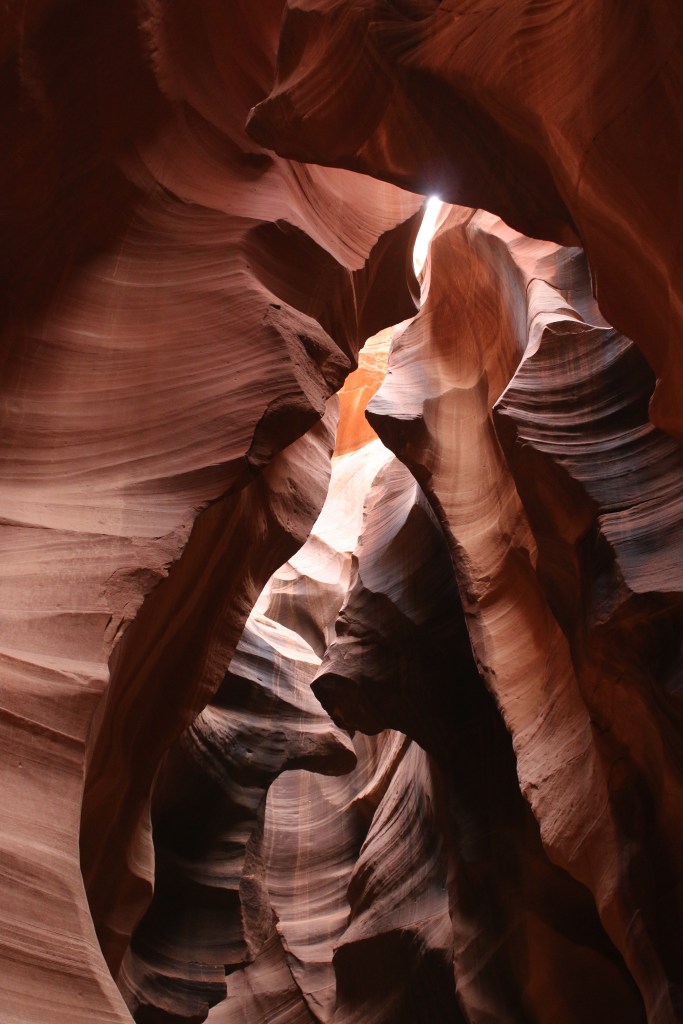
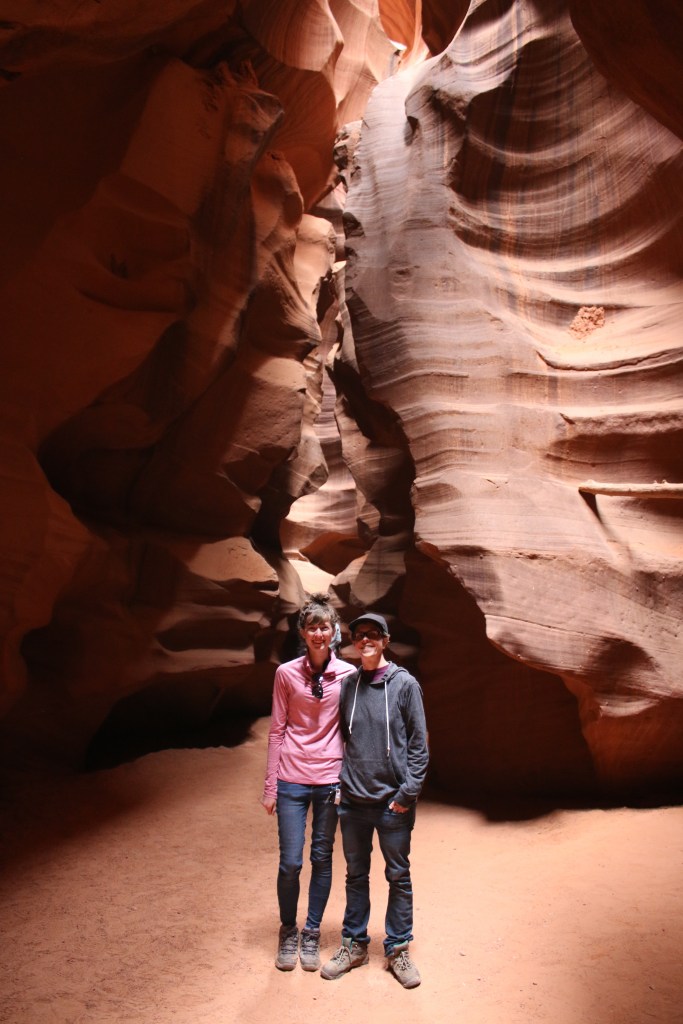
The entrance to the canyon nestled deep within the Navajo Desert. We were quite literally in the middle of the nowhere; the surroundings amazed me. We all gazed in quiet, wondrous awe as we eagerly hopped off the bus and delved into the canyon, a sacred aura almost swirling the atmosphere. Tongue-tied, I walked in silent amazement, craning my neck in all directions, soaking in the spectacular sights. Our tour guide rattled off a bunch of facts about the Navajo Reservation and how this ground was sacred and therefore protected by the tribe. Even touching the walls can harm and discolor, so were advised to look, not touch. This took some self control, as I so badly wanted to run my fingers across the smooth, fiery rock walls. There were also some neat formations in the narrow passageways that our guide pointed out to us. My favorite was a heart. The rushing water and heavy wind eroded this sandstone into a perfect heart if one looked at it at the correct angle. If you’re having trouble imagining this phenomenon, take a look at this photo that my wife snapped. Truly amazing, right?
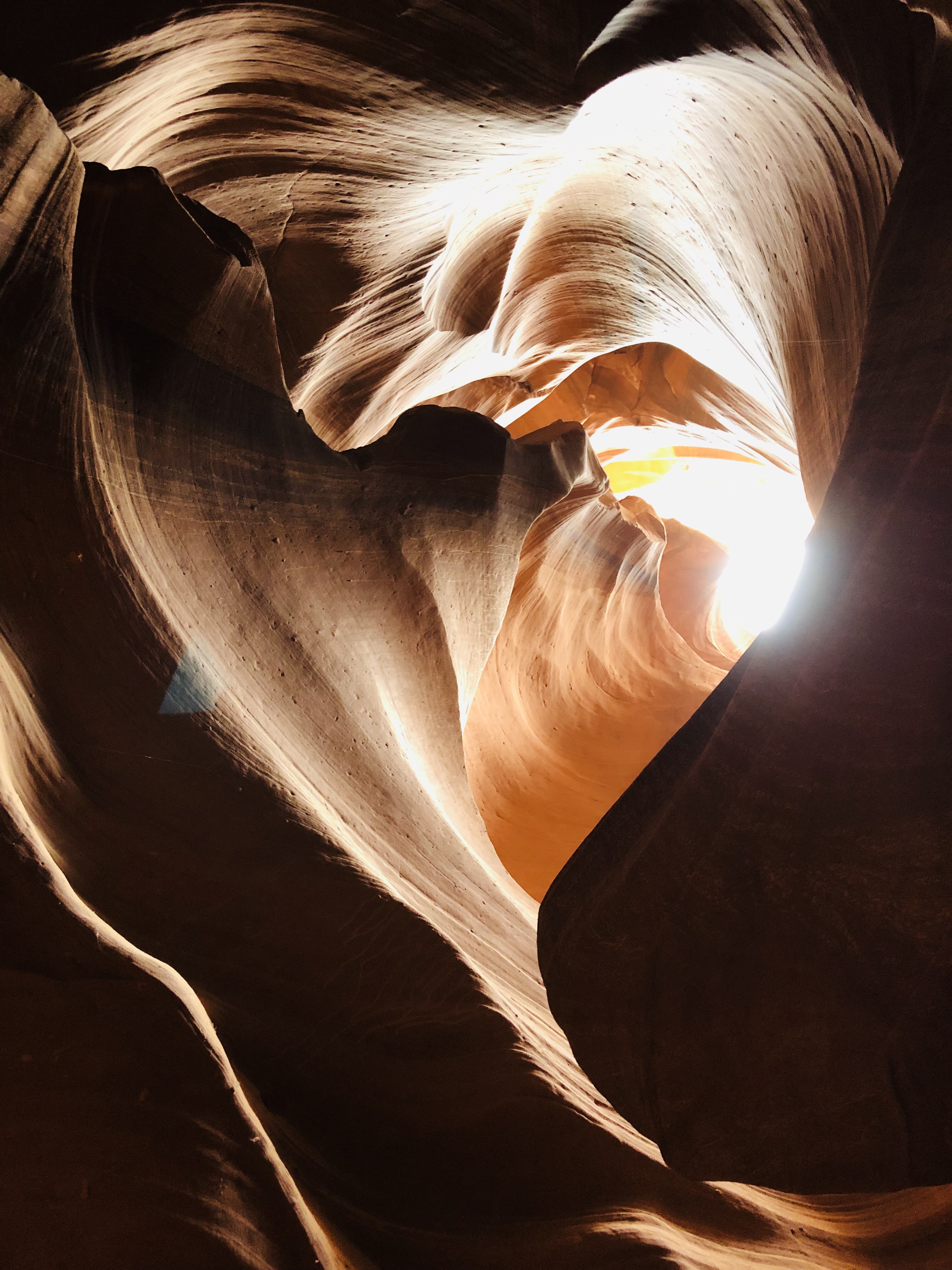
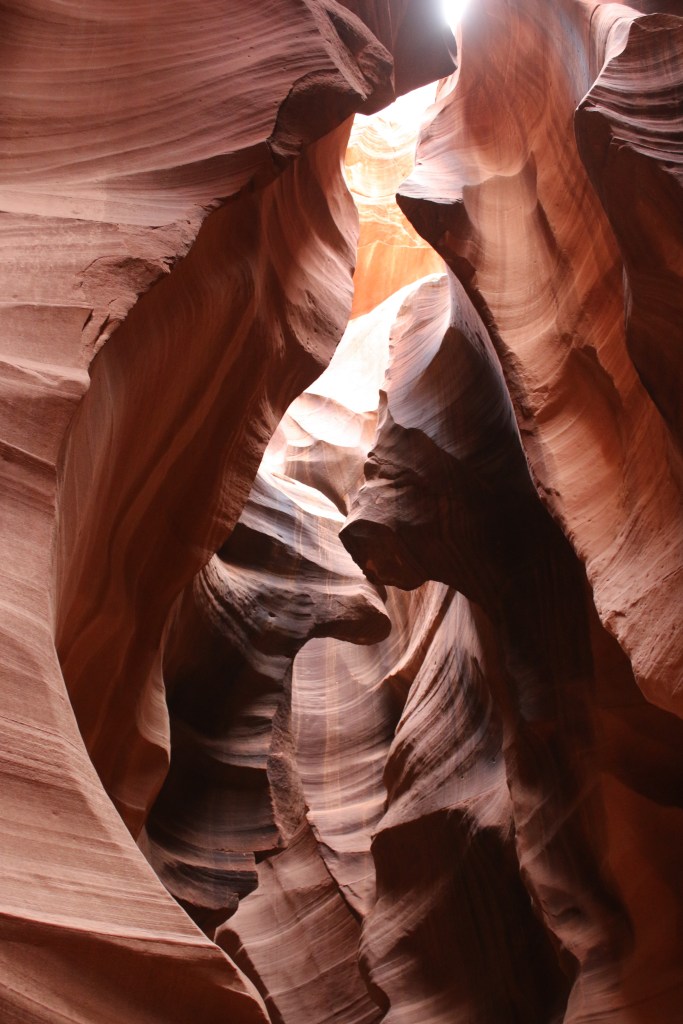
As we wound our way through the pathways, sunlight continued to pour in and flush certain spots with filtered rays. The way the light bounced off the walls is indescribable. Experts say that the best time to view the rays are midday, between 11am and 1:30pm. At these times, the sunlight is perpendicular to the canyon, causing a beautiful “waterfall” of light to stream inside. But honestly, we visited the canyon in the late afternoon, and the canyon was stunning. I truly believe that the canyon can’t be viewed at a “bad” time.
This was just a glimpse into our Arizona trip. Antelope Canyon is definitely a must-see if you’re visiting Arizona, but if you’re wondering what our full itinerary was, stay tuned because I will be making a blog post specifically about this topic!
 Wonder. Wander. Repeat.
One thought on “Antelope Canyon: Unveiling the Mystery Inside the Orange Walls”